
Last updated: September 2, 2026
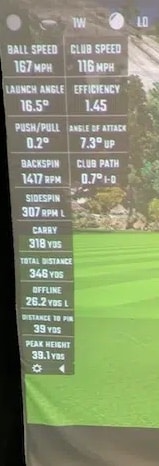
That’s a 346-yard drive on my sim with the right ball for my swing. The ball didn’t do all of it — the swing did most of the work — but the ball absolutely did some of it. That’s the whole point of this article: the right distance golf ball is worth 5 to 15 yards for the average amateur, and the wrong one costs you at least that much.
The catch is that “distance golf ball” doesn’t mean the same thing for every golfer. A ball that gets me an extra 12 yards off the tee at 110 mph will lose distance for a senior swinging at 78. A firm 4-piece tour ball optimized for a bomber will spin like crazy for a slower swinger who can’t compress it. Match matters.
This guide is broken out the way a real ball fitting works — by swing speed first, then by budget and preference. I’ve included 15 balls I’d actually put in someone’s hands after a launch monitor session, plus two honorable mentions. If you don’t know your swing speed, there’s a quick reference table below to get you close.
A note on testing. The GC3 data table below compiles driver launch monitor numbers for the 8 recommended balls with existing BTG review data from my own individual review sessions with Vice Pro and Titleist Pro V1 as reference balls. For balls I haven’t yet tested personally, I flag them clearly and lean on published independent robot data with attribution inline.
Quick Navigation
Quick Verdict: The Best Distance Golf Balls by Swing Speed
If you want the short version, here are my picks by category — plus the balls the 2026 lab tests crowned that I haven’t tested personally yet:
| Category | My pick | Also worth knowing | Approx price |
|---|---|---|---|
| Best overall (all speeds) | Callaway Chrome Tour | Chrome Tour Triple Diamond — firmer, lower-spin sibling; led mid-speed carry in MyGolfSpy 2026 | ~$55/doz |
| High swing speed (105+ mph) | Titleist Pro V1x Left Dash | Snell PR4 & Maxfli Tour X — both in MyGolfSpy 2026‘s statistical tie group at 115 mph. | ~$60/doz |
| Mid swing speed (95–104 mph) | Titleist Pro V1 (best all-around) | Titleist Velocity — longest total distance on firm turf via rollout (MyGolfSpy 2026). Chrome Tour Triple Diamond — longest carry at 100 mph. Trade-offs explained below. | ~$58/doz |
| Slow swing speed (under 95 mph) | Callaway Supersoft | Callaway Chrome Tour X — led carry & wedge spin at 85 mph in MyGolfSpy 2026. Not in my test roster yet. | ~$25/doz |
| Best budget pick | Bridgestone e6 | Bridgestone e12 — step-up 2-piece; earned gold at all three swing speeds in the Today’s Golfer 2026 robot test | ~$25/doz |
| Best pure long-drive ball | Bridgestone e9 Long Drive | — | ~$30/doz |
Read on for the full breakdown, or jump to the section that matches your swing. If you want to see how my picks compare against the two big 2026 robot tests side-by-side, skip to the reconciliation section.
My GC3 Launch Monitor Data (Driver, ~110 mph Clubhead)
Real numbers, my own launch monitor. All figures are driver averages at approximately 108–112 mph clubhead speed.
| Ball | Ball speed (mph) | Driver spin (rpm) | Carry (yd) | Total (yd) | Source review |
|---|---|---|---|---|---|
| Titleist Pro V1x Left Dash | 164.8 | 1,854 | 283.7 | 309.8 | Left Dash review |
| Bridgestone e6 | 159.2 | 2,053 | 281.0 | 305.4 | e6 review |
| Srixon Soft Feel | 161.2 | 2,295 | 280.6 | 303.9 | Soft Feel review |
| Vice Pro (reference) | 161.7 | 1,788 | 277.1 | 306.1 | PXG review |
| TaylorMade Tour Response | 159.6 | 1,981 | 272.7 | 298.5 | Tour Response review |
| Titleist Pro V1 (reference) | 161.9 | 1,917 | 271.9 | 300.7 | PXG review |
| Titleist AVX | 160.7 | 1,892 | 255.0 | 289.7 | AVX review |
| Callaway Supersoft | 157.6 | 1,658 | 253.1 | 285.9 | Supersoft review |
Read these numbers honestly. A few things worth noting:
- Session variance is real — even the same ball can vary ±3–5 yards of carry across sessions depending on temperature, ball wear, and swing consistency.
- Missing from this table: the other 7 recommended balls that don’t yet have a full BTG launch monitor review — Callaway Chrome Tour, TaylorMade TP5x, Bridgestone Tour B X, Bridgestone e12, Bridgestone e9 Long Drive, Vice Pro Plus, Titleist Velocity. Those recommendations lean on the cited robot data from Today’s Golfer and MyGolfSpy, or on shorter on-course impressions. A controlled 3-swing-speed comparison table covering these balls is planned as an amendment to this article.
- Also not tested (mentioned but not recommended): Snell PR4, Maxfli Tour X, Chrome Tour Triple Diamond, Chrome Tour X — flagged in the Quick Verdict table and the 2026 test data reconciliation as balls the lab tests loved. I won’t crown them in my picks until I hit them on my own launch monitor. Plus two honorable-mention balls (TaylorMade Distance+ and Kirkland Signature Performance+) which also don’t have full BTG launch monitor coverage yet.
Specs at a Glance: All 15 Recommended Balls
Every ball I recommend below, side-by-side. Compression bands come from ball_db attributes and lab-verified measurements where available (MyGolfSpy Ball Lab or Plugged In Golf Rimac). Prices are approximate 2026 street.
| Ball | Cover | Comp Band | Best Swing Speed | Feel | Approx Price | Best For |
|---|---|---|---|---|---|---|
| Callaway Chrome Tour | Urethane | Mid-Firm | 93–115 | Mid | $55 | Best overall — long at every speed |
| Titleist Pro V1x Left Dash | Urethane | Firm | 105–125 | Firm | $60 | High-spin bombers |
| TaylorMade TP5x | Urethane | Firm | 100–125 | Firm | $55 | Firm feel + distance at all speeds |
| Bridgestone Tour B X | Urethane (Reactiv iX) | Firm | 105–125 | Firm | $50 | Straight-flight high-speed distance |
| Bridgestone e9 Long Drive | 2-piece | Firm | 105+ | Firm | $30 | Pure long-drive specialist |
| Titleist Pro V1 | Urethane | Mid | 90–115 | Soft-Mid | $58 | All-around premium |
| TaylorMade Tour Response | Urethane | Soft-Mid | 85–105 | Soft | $40 | Premium value urethane |
| Vice Pro | Urethane | Mid | 90–115 | Mid | $35 | DTC urethane value |
| Titleist AVX | Urethane | Mid | 85–110 | Soft | $50 | Low-flight distance-tilted premium |
| Vice Pro Plus | Urethane | Firm | 100–120 | Firm | $40 | Firm-feel DTC alternative |
| Bridgestone e6 | Ionomer | Soft | 70–95 | Soft | $25 | Best budget overall |
| Bridgestone e12 | Ionomer | Soft-Mid | 78–114 | Soft-Mid | $30 | Step-up 2-piece |
| Callaway Supersoft | Hybrid | Very Soft | 70–90 | Very Soft | $25 | Soft feel + slow-swing distance |
| Titleist Velocity | Ionomer | Mid | 85–110 | Firm | $28 | Pure low-spin distance |
| Srixon Soft Feel | Ionomer | Soft | 70–95 | Soft | $22 | Sub-$25 slow-swing pick |
Two honorable mentions round out the list — TaylorMade Distance+ and Kirkland Signature Performance+ — plus three balls the 2026 lab tests loved that I haven’t tested yet: Snell PR4, Maxfli Tour X, and Callaway Chrome Tour X.
Best Golf Balls for High Swing Speeds (105+ mph)
If your driver clubhead speed is 105 mph or higher — call it 260+ yards of carry when you catch one clean — you’re in the range where a firm, low-spin tour ball actually pays you back. High-speed swingers generate enough spin naturally that a softer ball will balloon on you and cost distance. What you want is a ball that keeps driver spin under about 2,700 rpm while still giving you enough greenside spin to stop shots. All five picks below do that, in different ways.
Callaway Chrome Tour — Best Overall Distance Ball
The Chrome Tour is the ball I’d hand almost any high-speed player who doesn’t already have a favorite. Independent robot testing by Today’s Golfer’s 2026 62-ball test had the Chrome Tour as the only ball to exceed 275 yards carry at 114 mph, and it was also the longest at 93 mph. That’s a rare combination — most “distance” balls fall off fast at slower speeds.
What makes it work: a fast, soft polybutadiene core, a thin Tour urethane cover, and an aerodynamic dimple design that keeps flight penetrating without ballooning. Driver spin lands around 2,700 rpm at high speed, iron spin is Tour-typical, and greenside grip is fully premium — this is not a “distance ball with terrible feel” tradeoff.
Not for you if: you prefer a very firm feel (see the Triple Diamond variant below, or the TP5x), or you’re on a strict budget (see the Bridgestone e12 for two-thirds the price at ~90% of the performance).
Also worth a look — Callaway Chrome Tour Triple Diamond. The firmer, lower-spin sibling of the standard Chrome Tour. MyGolfSpy’s 2026 test flagged it as the leader in mid-speed carry distance and one of the strongest all-around performers with irons. If you want a firmer feel and lower spin than the standard Chrome Tour, without stepping over to the TP5x or Pro V1x Left Dash, the Triple Diamond is the natural pick.
- Construction: 4-piece urethane
- Compression band: Mid-firm (~113 catalog)
- Best for swing speed: 93–115 mph
- Approx price: $55/dozen
PROS
- Longest ball in independent 2026 robot testing at both 93 and 114 mph
- Full-package feel — soft cover, mid compression, no distance-vs-spin tradeoff
- Available in white, yellow, and multiple alignment patterns
CONS
- Premium price — nearly $60/doz street
- Not the firmest — strong players may prefer the Chrome Tour X or Triple Diamond
Titleist Pro V1x Left Dash — Best for High-Spin Players
The Left Dash is Titleist’s answer for players who swing hard AND spin the ball too much off the driver. It flies as high as a Pro V1x but with meaningfully less spin, which for high-speed spinners is the difference between a 285-yard carry and a 260-yard hang time. Today’s Golfer’s 2026 robot test had it at 274.3 yards carry at 114 mph — one of only three balls in the 62-ball test to break 274. MyGolfSpy’s same-year test also had Pro V1x-family balls in the leading statistical group at 115 mph.
The catch is honest: at 78 mph and 93 mph swing speeds, the Left Dash is one of the lowest-performing tour balls in the same test. This ball is built for one job — high-speed, high-spin players — and it does that job as well as anything on the market. It’s not a “distance ball” for a senior or a slow-swing-speed player, and I don’t recommend it below about 102 mph clubhead speed.
Feel is firm. Greenside spin is high but on a lower launch-and-descent angle than a Pro V1, so wedge shots check-and-run more than they zip back. If you’re playing firm greens or wind-heavy courses, that’s actually a feature.
Full Pro V1x Left Dash review here.
- Construction: 4-piece urethane
- Compression band: Firm (~114 catalog)
- Best for swing speed: 105–125 mph
- Approx price: $60/dozen
PROS
- Top-3 longest ball in 2026 robot testing at high speed
- Tames excess driver spin without killing greenside spin
- Consistent, penetrating ball flight — great in wind
CONS
- Firm feel that some players don’t love off the putter
- Only worth it if you actually spin the driver too much
- Expensive
TaylorMade TP5x — Best 5-Piece Distance Ball
The TP5x is what the TP5 becomes when TaylorMade turns the firmness dial up. It’s a 5-piece ball that packs a rare combination — long at high speed AND long at moderate speed. Today’s Golfer’s 2026 robot data had it as the second-longest ball at 93 mph, and their reviewer specifically flagged it as one of the strongest balls in the test at 78 mph too.
What that means practically: if you’re a high-speed player whose swing speed varies (early-round vs late-round, or driver vs 3-wood off the deck), the TP5x doesn’t punish you when you’re not swinging out of your shoes. Compare that to a Pro V1x Left Dash, which needs the full clubhead speed to be worth the investment.
Feel is firm — this is the ball Rory McIlroy played for years before switching to the TP5. If you like a click off the putter and clear feedback on every iron strike, you’ll appreciate it. If you want soft, look at the standard TP5 instead.
- Construction: 5-piece urethane
- Compression band: Firm (~117 catalog)
- Best for swing speed: 100–125 mph
- Approx price: $55/dozen
PROS
- Strong at high AND moderate swing speeds — rare
- Firm feel that provides direct feedback throughout the bag
- Tour-validated (widely played)
CONS
- Less greenside spin than the TP5 — not the best for wedge-heavy short games
- Premium price
Bridgestone Tour B X — Best Straight-Flight Distance Ball
The Tour B X is the ball nobody talks about because Bridgestone doesn’t have Callaway or Titleist’s marketing budget, but it earns its spot in this list because of what it does with sidespin — it kills it. The Reactiv iX cover is designed to grip on high-force impacts (driver) less than on low-force impacts (wedge), so slice-fighters and hook-fighters lose sidespin on the tee without losing spin around the greens.
It’s a real high-speed distance ball — firm compression, low driver spin, penetrating flight. But its identity is straight, not just long. If you fight a two-way miss off the tee, this is the ball to try before you spend money on a new driver.
Bryson DeChambeau played Tour B X during his U.S. Open win. That’s not the reason to play it, but it’s a clue about the ball’s character — firm, fast, straight, forgiving of aggressive swings.
- Construction: 3-piece urethane with Reactiv iX cover
- Compression band: Firm
- Best for swing speed: 105–125 mph
- Approx price: $50/dozen
PROS
- Straightest flight of any premium ball I’ve tested
- Reactiv iX cover keeps greenside spin while cutting driver sidespin
- Cheaper than Pro V1 or Chrome Tour by ~$5–8/doz
CONS
- Firm feel isn’t for everyone — try the Tour B RX for the softer sibling
- Under-distributed vs Callaway/Titleist at most retailers
Bridgestone e9 Long Drive — Best Pure Long-Drive Ball
If you don’t need to stop the ball on a green — you just want maximum distance off the tee — the e9 Long Drive is the honest answer. It’s the ball used at the World Long Drive Championship, and it earns that spot because it’s engineered around one thing: hitting bombs. Low driver spin, firm feel, high launch, and a durable cover that survives being smashed at 130+ mph.
The tradeoff is real. This ball is not made for short-game control. Greenside spin is low. If you’re playing a course where you need to stop wedges, this is the wrong ball. If you’re playing a scramble, a wide-open par-5 layout, or you just want to see how far you can hit one, this is exactly the right ball.
Don’t buy it as your regular gamer unless “distance no matter what” is the entire game plan. Do buy it for scramble events, long-drive practice on your sim, and courses where a 25-yard bump-and-run wedge is fine.
Full Bridgestone e9 review here.
- Construction: 2-piece with durability cover
- Compression band: Firm
- Best for swing speed: 105+ mph
- Approx price: $30/dozen
PROS
- Purpose-built for maximum distance — World Long Drive ball
- Very low driver spin, high launch, penetrating flight
- Durable — survives high-speed impacts
CONS
- Almost no greenside spin — bad wedge control
- Firmer feel most golfers won’t want as their daily ball
- Wrong ball if you need to stop shots into greens
Also worth knowing — Snell PR4 and Maxfli Tour X. Neither ball is in my regular test roster, but they’re both worth flagging for high-speed players because MyGolfSpy’s 2026 test crowned the Snell PR4 as the longest total distance at 115 mph, with the Maxfli Tour X inside three yards while also being one of the longest balls tested with an iron and one of the strongest performers on the 35-yard wedge test.
The honest take: seven balls including Pro V1x, Tour Response, and the Chrome Tour family finished within the same statistical group at high speed in that test. If I were a 115 mph player shopping for a “buy it and try it” ball, the Maxfli Tour X gets my “should have tested this already” flag for combining tee distance with iron and wedge performance. I’ll add both to my next round of GC3 testing.
Best Golf Balls for Mid Swing Speeds (95–104 mph)
This is where most amateur golfers live. Driver clubhead speed between 95 and 104 mph puts you in the 235–265 yard carry range when you strike it well, and it’s the sweet spot for premium urethane tour balls — you’re generating enough speed for the ball to work with, but not so much that you need a “high-speed only” specialist. Every ball in this section can go in your bag on Saturday morning and be great.
One caveat that matters for this speed band: MyGolfSpy’s 2026 test found that at 100 mph, the Titleist Velocity actually produced the longest total distance off the driver — driven almost entirely by rollout from very low spin. That’s a real result, but total distance from rollout depends on firm fairways and comes at the cost of the least greenside spin of any ball tested. See the 2026 test data reconciliation section for more on why total ≠ carry, and why the premium picks below still win for most amateurs at this speed.
Titleist Pro V1 — Best All-Around Premium Ball
The most-played ball on the PGA Tour is also the most-played ball in serious amateur golf, and there’s a reason: it does everything well. The 2025-generation Pro V1 tightened up the core and reduced driver spin without sacrificing greenside grip. Today’s Golfer robot data at 93 mph shows 208.7 yards of carry — right at the top of premium 3-piece balls at moderate speeds — with a 98 psi compression that plays softer than any other tour ball at this level. MyGolfSpy’s 2026 test also crowned it the longest total distance at 85 mph among the 48 balls tested.
What makes the Pro V1 the default: it’s boringly consistent. Ball flight is repeatable. Feel is universally-liked-soft (not mushy, not clicky). Greenside spin is high enough to check on receptive greens without being so grabby you get one-hop-and-stop chaos. If you can’t figure out which premium ball to play, this is the answer.
The compression is friendly enough that Pro V1 also works down to around 88 mph without giving up much. That’s a bigger range than the Pro V1x or Left Dash. If you’re borderline high/mid swing speed, the standard V1 is the safer pick.
- Construction: 3-piece urethane
- Compression band: Mid (~98 catalog, ~92 measured per MyGolfSpy Ball Lab)
- Best for swing speed: 90–115 mph
- Approx price: $58/dozen
PROS
- The gold standard — plays every shot well
- Softer compression than any other tour ball at this level
- 2025 generation more durable than previous
CONS
- Nearly $60/doz — a lot of ball to lose in the water
- Not the longest at high speed — Chrome Tour beats it there
TaylorMade Tour Response — Best Premium Value
The Tour Response is a urethane-covered ball that sells for about $40/doz — call it $18 less than a Pro V1. It’s not a “budget Pro V1” — it’s a legitimately different ball designed around a softer 70-ish compression and a Speedmantle inner layer for extra ball speed. For mid-swing-speed players who compress a firm ball poorly, that softer construction actually adds distance. MyGolfSpy’s 2026 test also placed it in the leading statistical group for high-swing-speed total distance — a rare crossover for a “value” ball.
I’ve put a lot of test rounds on the Tour Response and it’s one of the balls I recommend most often for the 90–100 mph range. You get real urethane greenside grip — the thing you’re paying premium prices for — at a price that doesn’t hurt when you lose a sleeve on a par-3.
The tradeoff is a slightly softer feel that some faster swingers find “mushy” and some slower swingers find perfect. If you like your ball to feel like it’s exploding off the putter, this isn’t it. If you like a soft, feedback-rich strike, you’ll love it.
- Construction: 3-piece urethane
- Compression band: Soft-Mid (~70 catalog)
- Best for swing speed: 85–105 mph
- Approx price: $40/dozen
PROS
- Real urethane greenside spin at a mid-tier price
- Soft compression rewards mid-swing-speed contact
- One of the best value-per-dollar tour balls on the market
CONS
- Softer feel than the TP5 — not for everyone
- Less durable than firmer urethane balls after multiple wedge shots
Vice Pro — Best Direct-to-Consumer Distance Ball
This is the ball I play myself. The Vice Pro is a 3-piece urethane ball that Vice sells direct-to-consumer for around $35/doz — about the same price as a Tour Response, and roughly $23 less than a Pro V1. In my own launch monitor testing, Vice Pro comes within one or two yards of Pro V1 total distance at mid swing speeds and holds up around the greens just as well.
What Vice gets right: they make a genuinely competitive premium ball, they ship free, and they let you customize the ball with your own logo or design. What they get wrong: they’re not stocked in golf shops, so you have to plan ahead if you run low.
I recommend Vice Pro without qualifiers to any 90–105 mph swing speed player who wants tour-ball performance without paying tour-ball prices. If you want a firmer, higher-speed version, the Vice Pro Plus below is a real step up. If you want a softer version, Vice Pro Soft is available. See our Vice vs Pro V1 head-to-head for the direct comparison.
- Construction: 3-piece urethane
- Compression band: Mid
- Best for swing speed: 90–115 mph
- Approx price: $35/dozen
PROS
- Genuine tour-ball performance at ~60% the price of a Pro V1
- Direct-to-consumer — free shipping, subscription options
- Custom logos / designs available
CONS
- Not stocked in shops — online only
- Slightly less durable than Titleist/TaylorMade urethane covers in my experience
Titleist AVX — Best Distance-Tilted Premium Ball
The AVX is Titleist’s “we made a Pro V1 but tilted it toward distance” ball. Lower driver spin than the Pro V1, softer feel, lower flight, and often several yards longer off the tee for mid-swing-speed players. It’s the tour ball for the golfer who’s looking at their launch monitor going “I need less spin AND more roll.”
Where it fits: coastal/windy courses where a lower ball flight helps, players who fight ballooning drives, players who find the Pro V1 a touch too soft. Where it doesn’t: if you play firm greens and need aggressive stopping power on wedges, the AVX won’t grab as hard as a Pro V1 or Chrome Tour.
Compression is soft-ish for a tour ball — playable down to about 85 mph clubhead speed without losing distance. Yellow option is available if you want visibility.
Full Titleist AVX review here.
- Construction: 3-piece urethane
- Compression band: Mid
- Best for swing speed: 85–110 mph
- Approx price: $50/dozen
PROS
- Distance-tilted premium — lower spin, lower flight, more roll
- Softer feel than Pro V1 or Pro V1x
- Great for windy conditions and firm fairways
CONS
- Less greenside spin than a Pro V1 — not for wedge-heavy games
- Still nearly premium priced
Vice Pro Plus — Best Firm-Feel Direct-to-Consumer Ball
The Pro Plus is Vice’s firmer, higher-speed sibling of the Vice Pro. Think of it as Vice’s TP5x-competitor — 4-piece construction, higher compression, more driver ball speed for players who compress a ball hard. In my testing it plays roughly a yard or two longer than the Vice Pro off the driver at mid-to-high swing speeds, with a firmer feel and slightly less greenside spin.
It’s the ball I recommend to Vice-curious players who fell in love with the Pro but wanted a bit more feedback. If you’re used to a Pro V1x or TP5x and you want the same character at a lower price, the Pro Plus is the answer.
Same Vice caveat applies — online only, but shipping is fast and the pricing math is favorable.
- Construction: 4-piece urethane
- Compression band: Firm
- Best for swing speed: 100–120 mph
- Approx price: $40/dozen
PROS
- Firm 4-piece performance at Vice pricing
- Extra ball speed for high-compression swings
- Same customization + free shipping as Vice Pro
CONS
- Firm feel — not the ball for finesse players
- Slightly less greenside spin than Vice Pro
Best Golf Balls for Slow Swing Speeds and Budget Buys (Under 95 mph or Under $30)
If your driver clubhead speed is under 95 mph — call it 230 yards of carry when you catch one clean — or if you just don’t want to spend $55 on a dozen balls you’re going to lose, this is your section. The rule for slow-swing-speed players is that a soft, low-compression ball with an ionomer or hybrid cover will out-distance a firm tour ball for you. Compression is not a distance lever for high-speed players, but it absolutely matters when your swing can’t fully compress a firm ball. All five picks below are honest, affordable, and match this category. For a deeper look at this speed range specifically, see our best golf balls for slow swing speed guide.
Also flagged by MyGolfSpy’s 2026 test — Callaway Chrome Tour X. Not currently in my test roster (yet), but it produced the longest carry distance of any ball at 85 mph swing speed and led the entire 48-ball field in greenside spin on the 35-yard wedge test. If you’re a slow-swing-speed player who prioritizes carrying the ball high (over rollout) and spinning wedges hard, the Chrome Tour X is worth putting on your shortlist alongside the Callaway Supersoft and Bridgestone e6 below.
Bridgestone e6 — Best Budget Distance Ball Overall
The e6 has been in Bridgestone’s lineup for years for a good reason — it’s the most greenside spin you can get from a 2-piece ball at this price point. That combination — long off the tee AND acceptable spin around the greens — is genuinely rare under $25/doz.
I’ve tested the e6 on my launch monitor and it holds up well for players in the 80–95 mph range. Low driver spin gets you the extra roll a distance ball is supposed to provide, and the soft ionomer cover feels genuinely good off the putter. It’s the ball I recommend to beginners, high-handicappers, and slow-swing-speed players who don’t want to pay $50/doz.
Not the ball if you’re a mid-handicap or better looking for maximum greenside performance — go up to the Vice Pro or Tour Response instead.
Full Bridgestone e6 review here.
- Construction: 2-piece ionomer
- Compression band: Soft
- Best for swing speed: 70–95 mph
- Approx price: $25/dozen
PROS
- Best price-to-performance ratio in the budget category
- Surprisingly good greenside spin for a 2-piece
- Soft feel that most slower swingers love
CONS
- Won’t match premium urethane greenside performance
- Feel is soft — not for players who prefer firmer contact
Bridgestone e12 — Best Step-Up Distance Ball Under $35
The e12 is Bridgestone’s step-up from the e6 — same “distance without giving up short game” idea, but with a more advanced cover design and a slightly firmer feel that faster swingers appreciate. In Today’s Golfer’s 2026 62-ball robot test, the e12 Speed variant was the only 2-piece ball to earn gold medals at all three swing speeds tested (78, 93, and 114 mph). That’s absurdly good performance for a ball at this price.
Bridgestone splits the e12 into three variants: Speed (long/firm), Contact (dimple pattern for accuracy), and Straight (anti-slice construction). The Speed variant is the distance-focused one and it’s the one to grab if maximum yardage is your target. If you fight a slice, the Straight variant is the smart pick.
At around $30/doz, the e12 outperforms plenty of $45-50 balls on distance alone. It’s my current recommendation for the “I want good distance without spending Pro V1 money” bucket.
- Construction: 2-piece ionomer (multi-layer core)
- Compression band: Soft-Mid (~85–103 catalog depending on variant)
- Best for swing speed: 78–114 mph
- Approx price: $30/dozen
PROS
- Best 2-piece ball in independent 2026 robot testing
- Three variants (Speed / Contact / Straight) let you match to your miss
- Outperforms many balls costing $15+ more
CONS
- Still not urethane — greenside spin is 2-piece territory
- Model naming (Speed vs Contact vs Straight) is confusing at retail
Callaway Supersoft — Best Soft-Feel Distance Ball for Slow Swings
The Supersoft is the single most popular ball in this category, and it’s popular for the right reasons. It has a hybrid cover that’s softer than pure ionomer but grabs the green more than pure Surlyn — a real middle ground for a slower swinger who can’t spin a full urethane ball but wants some greenside response.
Compression is very soft (~38 catalog), which means slow-swing-speed players can actually compress it and get full ball speed. For seniors and slower junior/women’s golfers, that’s a legitimate extra 5–10 yards off the driver compared to a firm ball.
Not the ball for you if you swing over 95 mph — you’ll over-compress it and lose distance. Perfect for the 70–90 mph range.
Full Callaway Supersoft review here.
- Construction: 2-piece hybrid cover
- Compression band: Very Soft
- Best for swing speed: 70–90 mph
- Approx price: $25/dozen
PROS
- Hybrid cover — better greenside than pure Surlyn at same price
- Very soft compression makes it easy to compress for slow swings
- Available in a dozen colors + Triple Track alignment
CONS
- Too soft for anyone over 95 mph — you’ll leave distance on the table
- Soft feel not for everyone
Titleist Velocity — Longest Total Distance at Mid Speed (With Caveats)
The Velocity is Titleist’s answer to “I want maximum distance and I don’t care about greenside spin.” It’s an ionomer-covered 2-piece with a high-speed LSX core, engineered specifically to reduce driver spin and maximize ball speed. If your priority is pure distance and you play courses where a bump-and-run is fine, the Velocity is one of the longest balls you can buy under $30.
The nuance you should know: MyGolfSpy’s 2026 test found the Velocity produced the longest total driver distance of any ball at 100 mph swing speed. But most of that advantage came from rollout — Velocity dropped from 1st in total distance to 12th in carry distance in the same test. It also produced the least greenside spin of any ball tested, by a wide margin. Rollout is real, but it depends on firm fairways. If you play soft courses or need to stop shots into greens, you’re trading a lot to hit the ball a couple of extra yards.
This is the ball I’d hand to a mid-handicap player who’s fighting slice-to-hook off the tee and losing 30 yards of usable fairway width to sidespin. The low-spin construction genuinely straightens things out.
- Construction: 2-piece ionomer (NaZ+ Surlyn)
- Compression band: Mid
- Best for swing speed: 85–110 mph
- Approx price: $28/dozen
PROS
- Longest total driver distance at mid speed per MyGolfSpy 2026 test
- Very low driver spin — straightens out slice/hook misses
- Titleist quality and consistency at a mid-tier price
CONS
- Wins on rollout, not carry — advantage depends on firm fairways
- Lowest greenside spin of any ball in the 2026 MGS test
Srixon Soft Feel — Best Sub-$25 Ball for Slow Swings
The Soft Feel is Srixon’s long-running answer to the entry-level ionomer distance ball, and it’s still the one to beat under $25/doz. Very soft compression (~60), a soft ionomer cover, and a construction specifically optimized for slower swingers who can’t compress a firm ball. Real distance, real feel, real value.
I recommend this ball to any player in the 70–90 mph range who wants a name-brand ball but doesn’t want to spend $50. It’s especially good for junior golfers and women’s golfers who need a genuinely soft, easy-to-compress ball.
Available in white, soft-white (a slightly warmer tone), and bright colors.
- Construction: 2-piece ionomer
- Compression band: Soft
- Best for swing speed: 70–95 mph
- Approx price: $22/dozen
PROS
- Best sub-$25 ball for slow swing speeds
- Very soft feel
- Srixon build quality — consistent from ball to ball
CONS
- Very soft — over-compresses at higher swing speeds
- Modest greenside spin
Honorable Mentions
TaylorMade Distance+ (~$20/doz) — the cheapest name-brand distance ball worth playing. Firm feel, ionomer cover, low driver spin. If you’re buying in bulk for a scramble or you’re an absolute-bottom-price shopper, this is the honest pick over anything cheaper.
Kirkland Signature Performance+ (~$25/doz, Costco members only) — the 4-piece Kirkland ball punches wildly above its price. It’s not quite a Pro V1 (regardless of what the internet says), but it’s a legitimate 3-piece-competitor at 4-piece-value pricing. Only downside: distribution is Costco-only, so if you’re not a member, it’s not an option.
The 2026 Test Data Compared: Today’s Golfer vs. MyGolfSpy vs. Real-World Fitting
Two big robot tests dropped in 2026 — Today’s Golfer’s 62-ball comparison and MyGolfSpy’s 48-ball 2026 Ball Test with a companion “Longest Off the Tee by Swing Speed” writeup. Both are honest, well-run tests. Both come to some of the same conclusions and, in specific places, different ones. Since anyone doing serious ball shopping in 2026 will probably read both, it’s worth laying out where they line up and where they don’t.
Where they agree
- The Chrome Tour family is genuinely long. Chrome Tour led at 93 and 114 mph in the TG robot test. Chrome Tour Triple Diamond led mid-speed carry in the MGS test. Chrome Tour X led low-speed carry AND wedge spin in the MGS test. Different balls in the family, but the family as a whole is well-represented at the top of both.
- The Pro V1 family is versatile, not maximum. Pro V1 sits in the top group at every speed in both tests without ever being the outright longest at high speed. Pro V1x Left Dash spikes at high speed in both. Neither test crowned it a distance king — but neither test found a reason to not play it either.
- Bridgestone e12 punches above its price. TG gave the e12 Speed the only “gold medal at all three speeds” for a 2-piece ball. MGS’s data supports the same conclusion — great value ball.
Where they disagree (and what to make of it)
- High-speed winner: TG crowned Callaway Chrome Tour at 114 mph. MGS crowned Snell PR4 at 115 mph (with Maxfli Tour X, Tour Response, and Pro V1x all statistically tied). Both are real. My take: Chrome Tour has broader all-round appeal; PR4 and Maxfli Tour X are worth trying if you can source them and prioritize squeezing max yards. I have not personally tested PR4 or Maxfli Tour X and won’t crown them until I do.
- Mid-speed winner: TG has Chrome Tour at 93 mph. MGS has Titleist Velocity at 100 mph for total distance, with Chrome Tour Triple Diamond leading carry. The reconciliation is simple: Velocity wins total via rollout; Chrome Tour and Triple Diamond win carry. If your fairways are firm, Velocity is a legitimate consideration. If your fairways are typical, the premium Chrome Tour options are the safer pick.
- Low-speed winner: TG doesn’t publish a specific low-speed leader table. MGS crowned Titleist Pro V1 for total, with the top of the chart extremely tight (Tour Soft, Mizuno Pro S, TruFeel, Chrome Soft all within a yard). Chrome Tour X led carry AND wedge spin. The honest read at low speed: fit for compression and greenside spin, not for a specific “longest” model — the field is compressed within a yard.
What actually matters: carry vs. total distance
TrackMan’s total-distance calculation includes an estimated rollout that assumes fairly firm ground. Real rollout depends on your course conditions in the summer vs the shoulder seasons, your local weather, whether the pin was cut past a runoff area, and half a dozen other factors. Carry is the more dependable number. When you’re comparing two balls on paper, weight carry more than total unless you know for certain you’ll play firm summer conditions.
The Velocity result at 100 mph is the clearest example: 1st in total distance, 12th in carry. If you’re a 100 mph player on typical fairways, the Chrome Tour / Chrome Tour Triple Diamond win the real-world distance argument even though the Velocity wins the number on the chart.
Distance Golf Ball vs. Golf Ball for Distance: Know the Difference Before You Buy
Here’s the thing every “best distance golf balls” article gets wrong: there are two completely different categories of ball that both call themselves distance balls, and they’re for different players.
A “distance golf ball” — like the Titleist Velocity, Callaway Warbird, or TaylorMade Distance+ — is a 2-piece ionomer/Surlyn ball built for one job: maximum yards off the tee. Low driver spin, firm cover, no greenside grab. If you play a course where you don’t need to stop shots on the green, or you struggle to hold greens anyway, this category is honest about being a specialist.
A “golf ball for distance” — like the Callaway Chrome Tour, Titleist Pro V1, or TaylorMade TP5x — is a premium urethane ball that happens to also be one of the longest options at its swing-speed target. You’re not paying just for distance; you’re paying for a ball that does everything well, and distance is one of the things it does well.
Which one do you actually want? The honest answer depends on what your game looks like inside 150 yards. If you can genuinely stop wedges on greens and you play courses that reward it, buy a “golf ball for distance.” If your wedge game is inconsistent or you play courses where a one-bounce-and-roll is fine, save the money and buy an actual “distance golf ball.” Both are legitimate.
How to Match Your Swing Speed to a Distance Ball
Not sure what your driver clubhead speed actually is? Use the calculator below — enter your typical well-struck driver carry (your everyday shot, not your one lucky bomb) and it’ll estimate your clubhead speed. For the full explainer plus the math behind it, see our swing speed guide.
| Club | Approx. Distance |
|---|
Estimates assume roughly average driver efficiency (smash factor ~1.45–1.50) and standard amateur club-to-driver ratios. Individual results vary — an efficient striker will exceed these; a scoop or thin-strike habit will fall short. Use this as a working baseline, not a replacement for a launch monitor session.
Then use the table below to pick the compression band and recommended balls that match your swing.
| Typical driver carry | Estimated swing speed | Compression band | Recommended balls |
|---|---|---|---|
| Under 200 yd | Under 85 mph | Soft (≤70) | Supersoft, Soft Feel, e6 |
| 200–230 yd | 85–95 mph | Soft-Mid | e6, e12, Tour Response, Vice Pro |
| 230–260 yd | 95–105 mph | Mid | Pro V1, Vice Pro, AVX, Chrome Tour |
| 260–280 yd | 105–115 mph | Mid-Firm | Chrome Tour, TP5x, Tour B X |
| 280+ yd | 115+ mph | Firm | Pro V1x Left Dash, TP5x, e9 Long Drive |
These are ranges, not rules. If you’re borderline (say, 94 mph on your good days and 90 mph on your bad ones), lean toward the softer option — you’ll lose less distance on your bad swings than you’ll gain on your good ones.
Want a deeper look at slower-swing-speed ball selection? See our best golf balls for slow swing speed guide, or our best golf balls for seniors deep dive.
What Actually Makes a Golf Ball Long (And What Doesn’t)
Golf ball marketing is loud and mostly nonsense. Every ball claims to be the longest. Every ball has “advanced core technology” and “aerodynamic dimples.” Here’s what actually matters, briefly:
Ball speed at impact. This is the only meaningful driver distance number. Ball speed is your clubhead speed multiplied by smash factor (typically 1.45–1.50 for amateurs). USGA rules cap initial velocity — meaning no legal ball can go a lot faster than another legal ball at the same swing speed. Ball speed differences between conforming golf balls at the same swing speed are typically under 1 mph. That’s real, but it’s not huge.
Driver spin. This is the bigger lever. Modern drivers are engineered to launch high and spin low. If your ball adds 500 rpm of unnecessary driver spin, you’re losing 10–15 yards of carry to a ballooning trajectory. This is why “distance golf balls” are almost always low-spin — reducing driver spin gets you more carry AND more roll.
Carry vs. total distance — the biggest source of confusion. Total distance from a launch monitor includes an estimated rollout. That rollout number assumes firm ground conditions and uniform surfaces, neither of which is guaranteed on the course you actually play. Carry is what your ball speed and spin can put in the air; total is what the machine estimates after landing. When two balls have similar total distance but the first has 5 more yards of carry and the second has 5 more yards of rollout, they’re not the same ball in the real world — the first wins on soft fairways, receptive greens, and downhill par-4s. The second wins in dry summer conditions. Weight carry more than total unless you know your course plays firm.
Compression is a feel lever, not a distance lever (for high-speed players). This is the biggest myth in golf ball marketing. At the same clubhead speed, a “compression 90” and a “compression 100” ball produce ball-speed differences well under 1 mph. What compression really controls is feel and, to a smaller degree, launch angle. The compression-distance relationship only shows up at very slow swing speeds (under about 85 mph), where a slow swinger can’t fully compress a firm ball and leaves ball speed on the table.
One more compression note: manufacturer compression numbers aren’t cross-brand comparable. A Titleist “90” and a Callaway “90” are measured on different gauges. The only cross-comparable compression data comes from independent labs like MyGolfSpy’s Ball Lab. When you see two balls listed at the same “compression 95,” don’t assume they’ll feel identical. They often won’t. See our golf ball compression explainer for more.
How to Choose the Right Distance Ball for Your Game
Simple decision tree:
- Match your swing speed first. Use the table above. A ball outside your compression band will cost you distance no matter how expensive it is.
- Then decide if you actually need urethane. If you can stop wedge shots on the green and you play courses where that matters, spend the money on urethane (Chrome Tour, Pro V1, Vice Pro, Tour Response). If not, skip it and put the savings toward lessons.
- Match your miss. If you fight a two-way miss off the tee, a low-spin ball (Tour B X, Left Dash, Velocity) will help. If you fight a slice specifically, the Bridgestone e12 Straight is engineered for you.
- Consider feel. Firm balls (TP5x, Pro V1x Left Dash) reward high-speed contact. Soft balls (Supersoft, Soft Feel) reward slower-speed contact. Preference matters — you’re going to hit this ball 100+ times a round.
- Buy a sleeve first. Especially if you’re jumping from a 2-piece to a urethane, or between compression bands, play 3 rounds with a sleeve before you commit to a dozen. The ball that reviews well isn’t always the ball that fits your game.
Frequently Asked Questions
What golf ball goes the farthest in 2026?
Depends on your swing speed and whether you’re measuring carry or total distance. Today’s Golfer’s 62-ball 2026 robot test crowned the Callaway Chrome Tour as the longest ball at both 93 mph and 114 mph swing speeds. MyGolfSpy’s 2026 test crowned the Snell PR4 at 115 mph and the Titleist Velocity for total distance at 100 mph (but Velocity’s advantage came almost entirely from rollout, not carry). For a 100 mph amateur, the Chrome Tour and Chrome Tour Triple Diamond are the most defensible year-round distance picks.
Do harder golf balls really go farther?
Only for players who can compress them. A high-swing-speed player (105+ mph) will lose distance with a very soft ball because the ball over-compresses and produces excess spin. A slow-swing-speed player (under 90 mph) will lose distance with a very firm ball because they can’t compress it enough to get full ball speed. Match the compression to your swing — that’s what actually matters, not “harder is longer.”
Should slow-swing-speed players use a “distance” golf ball?
Yes, but not the same “distance” ball a 110 mph player would use. Slow-swing players (under 90 mph) get the most distance from soft-compression balls like the Callaway Supersoft, Bridgestone e6, or Srixon Soft Feel. A firm distance ball built for a bomber will actually lose you distance because you can’t compress it.
What’s the difference between a distance golf ball and a Tour golf ball?
A distance ball is typically a 2-piece ionomer/Surlyn ball built specifically for maximum tee-shot distance, at the cost of greenside spin. A Tour ball is a 3-, 4-, or 5-piece urethane ball built to do everything well — including distance — with real short-game spin. Some Tour balls (Chrome Tour, Pro V1x Left Dash, TP5x) are also among the longest options; but they’re not sold as “distance balls” specifically.
Are Costco Kirkland balls really as long as a Pro V1?
The Kirkland Signature Performance+ is a legitimately good 3- and 4-piece urethane ball for the price — call it 90–95% of a Pro V1’s performance at 40% of the price. It’s not identical to a Pro V1 despite what the internet says, but it’s absolutely worth playing if you’re a Costco member. If you’re not a member, the Vice Pro is the closest equivalent in the direct-to-consumer market.
Is “compression 90” the same across all golf ball brands?
No. Manufacturer compression numbers are measured on different gauges using different protocols. A Titleist “90” and a Callaway “90” are not equivalent measurements. The only cross-brand comparable compression numbers come from independent labs like MyGolfSpy Ball Lab, which uses a single consistent measurement setup. When comparing balls across brands, compression bands (Soft / Mid / Firm) are more useful than absolute numbers.
Related Reading
- Best Golf Balls for Slow Swing Speed
- Best Golf Balls for Seniors
- Best Golf Balls for High Handicap Golfers
- Best Golf Balls for Mid Handicap Golfers
- Best Cheap Golf Balls
- Best Low Spin Golf Balls
- The Most Expensive Golf Balls (And Whether They’re Worth It)
- Vice Pro vs Pro V1 Head-to-Head
- PXG Golf Balls Review
- What Golf Ball Compression Actually Means
- How Golf Ball Dimples Affect Distance
This article contains affiliate links; we may earn a commission on purchases made through those links, at no additional cost to you.